 |
|
||||||||||||||||||||||||||||||||







 Diagnosis Diagnosis |
Treatments |
Orthotics
 Orthotics are shoe inserts that correct an abnormal, or irregular,
walking pattern. Generally called arch supports, orthotics allow people
to stand, walk, and run more efficiently and comfortably. Podiatrists
sometimes prescribe orthotic devices to correct an abnormal walk,
or gait, and often for patients following surgery. Orthotic devices
come in many shapes and sizes, and materials and fall into three
main categories: those designed to change foot function, are primarily
protective in nature, and those that combine functional control and
protection. While over-the-counter orthotic inserts help people with
mild symptoms, they normally cannot correct the wide range of symptoms
that prescription foot orthoses can since they are made to fit a
person with an "average" foot shape.
Orthotics are shoe inserts that correct an abnormal, or irregular,
walking pattern. Generally called arch supports, orthotics allow people
to stand, walk, and run more efficiently and comfortably. Podiatrists
sometimes prescribe orthotic devices to correct an abnormal walk,
or gait, and often for patients following surgery. Orthotic devices
come in many shapes and sizes, and materials and fall into three
main categories: those designed to change foot function, are primarily
protective in nature, and those that combine functional control and
protection. While over-the-counter orthotic inserts help people with
mild symptoms, they normally cannot correct the wide range of symptoms
that prescription foot orthoses can since they are made to fit a
person with an "average" foot shape.
Surgery
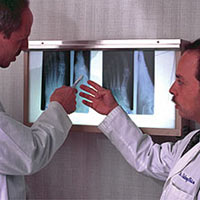 Surgery on the foot, ankle, or lower leg is usually performed
by podiatric surgeons. Most surgeries can be performed on an out-patient
basis in a hospital or surgi-center. Many kinds of foot surgeries require
you to have your foot immobilized after the procedures with such
things as a bandage, splint, surgical shoe, cast, or open sandal.
Most surgeons will encourage post-operative exercise of the foot
and legs to speed recovery. After sufficient healing time, most patients
can resume wearing their usual footwear. In addition, many patients
need additional therapy or treatments after surgery in order to aid
in the healing and recovery process. These may include physiotherapy,
orthotic devices (foot supports), and special footwear.
Surgery on the foot, ankle, or lower leg is usually performed
by podiatric surgeons. Most surgeries can be performed on an out-patient
basis in a hospital or surgi-center. Many kinds of foot surgeries require
you to have your foot immobilized after the procedures with such
things as a bandage, splint, surgical shoe, cast, or open sandal.
Most surgeons will encourage post-operative exercise of the foot
and legs to speed recovery. After sufficient healing time, most patients
can resume wearing their usual footwear. In addition, many patients
need additional therapy or treatments after surgery in order to aid
in the healing and recovery process. These may include physiotherapy,
orthotic devices (foot supports), and special footwear.
 |
Sprains and fractures. | |
Corns and hammertoes. |
|
Arthritis and joint disease. | |
Flat feet. |
|
Benign and malignant tumors. | |
Heel or toe spurs. |
|
Birth deformities. | |
Ingrown toenails. |
|
Bunions. | |
Neuromas (nerve tumors). |
|
Calluses and warts. | ||
Therapies
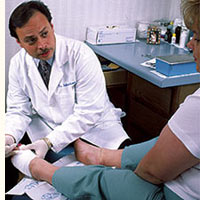 There are therapies particular to your foot or
ankle problem which Dr. Weiser can discuss with you after diagnosis.
Doctor Weiser can help you determine those that might be most effective
with regard to time, cost, and prognosis. Below is a general discussion
of the most common therapies used in podiatry.
There are therapies particular to your foot or
ankle problem which Dr. Weiser can discuss with you after diagnosis.
Doctor Weiser can help you determine those that might be most effective
with regard to time, cost, and prognosis. Below is a general discussion
of the most common therapies used in podiatry.
Athletes Foot and Fungal Nail Treatment
Athlete's foot can usually be
treated with antifungal creams. Re-infection is common, so it is important
to continue the therapy as prescribed, even if the fungus apparently
goes away. Severe cases of Athlete's foot may require foot soaks before
applying anti-fungal creams.
Cryotherapy
Cryotherapy involves freezing a wart using a very cold substance
(usually liquid nitrogen). Cryotherapy is a standard treatment for warts
and can be done in the doctor's office. It usually takes less than a
few minutes. Most cryotherapy treatment requires return visits to ensure
that the wart is completely removed.
Extracorporeal Shock Wave
Extracorporeal shock wave therapy is used to
treat chronic heel pain (plantar fasciitis/heel spur syndrome). During
this non-invasive surgical procedure, sonic waves are directed at the
area of pain using a device similar to that currently used in non-surgical
treatment of kidney stones. During the usually brief procedure of about
30 minutes, performed under local anesthesia and/or "twilight" anesthesia,
strong sound waves penetrate the heel area and stimulate a healing response
by the body. This therapy is a safe and effective alternative treatment
for heel pain and only requires a very short recovery time, mainly due
to the elimination of costly and invasive surgical procedures.
Physical Therapy
Physical therapy can often help pain and swelling in
a painful area of the foot or ankle. Such problems as heel spurs, bursitis,
plantar fasciitis, bunions, corns and calluses - and post-operative surgical
conditions - often respond well to physical therapy.
Common kinds of physical therapy may include hot packs, massage, electrical stimulation, ultra sound, and diathermy to relieve pain and swelling and to increase range of motion.
|
Diagnosis |