|

X-Rays
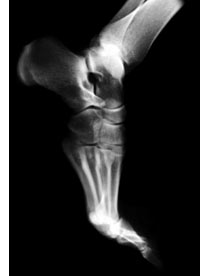 X-rays of the foot or ankle can help us determine whether a bone has
been fractured or injured or damaged by conditions such as an infection,
arthritis, or other disease. X-rays of the foot or ankle can help us determine whether a bone has
been fractured or injured or damaged by conditions such as an infection,
arthritis, or other disease.
Other reasons for conventional X-rays on your
feet include:
 |
Evaluate changes in the bones caused by such things
as an infection, arthritis, or other bone disease. |
|
Help evaluate whether a child's bones are growing normally. |
|
Locate foreign objects (such as pieces of glass or metal) in a
wound. |
|
To determine whether bones are properly set after treating a fracture
and placing a cast on an arm or leg. |
MRI
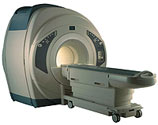
Magnetic resonance imaging is a sophisticated
diagnostic procedure to diagnose the following kinds of problems
or conditions:
|
Arthritis. |
 |
|
Fractures. |
|
Infection. |
|
Injuries of the tendons, ligaments, or cartilage. |
|
Tumors. |
| |
|
MRIs use no radiation like conventional X-rays or
CT scans. They employ a large magnet and radio waves to produce a kind
of three-dimensional image. MRIs are very good at portraying soft tissues
and bones in your feet and ankles. There are conditions which may not
make you a good candidate for a MRI such as having a pacemaker or various
implants.
If you have a dental filling or bridge, a replacement
hip or knee, or tubal ligation clips, you are usually safe to have a
MRI. In most cases, a full exam of the foot and ankle lasts from one
hour to 90 minutes.
|
 |







 Diagnosis